












How Do I Organise Coming Home with My Baby?

May
Your stay at the maternity unit is coming to an end and it’s finally time to go home with baby and begin your little family life. It’s both an exciting and a worrying moment, but there’s no way your doubts should overshadow your happiness! So here are all our precious tips to help you enjoy your first weeks at home with your little one calmly.
Plan ahead for coming home with your baby
Once your baby is with you, you’ll be short of time. So you don’t end up feeling overwhelmed, remember to plan ahead for anything that can make life easier.
And it starts as soon as you come home with your baby! If you’re going by car, remember to practise fitting the car seat or infant carrier with your partner a few weeks beforehand. It will save you spending an hour in the maternity unit car park… And if you don’t have a car, remember to book a taxi (one that provides what’s needed for baby’s safety). Avoid taking public transport with a newborn, as they haven’t been vaccinated yet.

Also, remember to stock up on food for you and your partner. Even if it seems trivial, you’ll be relieved not to have to think about the week’s menus and to already have meals prepared. Your baby will also need lots of things, especially nappies. You’ll be changing them very often, day and night (8 times a day at first!), so make sure you have enough in stock for the first few days.
If you’ve chosen not to breastfeed your little one, also remember to stock up on bottles, formula milk and bottled mineral water. Make sure that thewater you choose is labelled “suitable for infant feeding” and is low in minerals.
Get your baby’s things ready
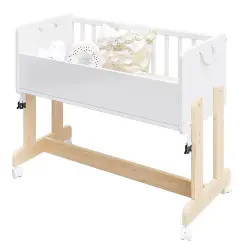
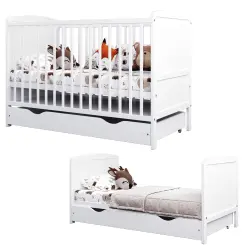
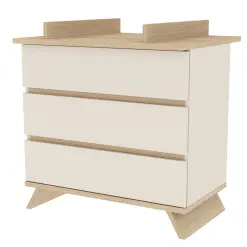
And that starts with a nursery that is ready, clean and tidy. Once your baby is here, it won’t be the time for finishing touches… Try to finish any decorating work a month before your baby arrives so that any toxic substances have time to evaporate, and air the room for 10 minutes a day.
As for their wardrobe, plan for enough bodysuits, sleepsuits, fitted sheets, baby sleeping bags and everything else they’ll need. Your little one is likely to spit up often and you’ll have to change them several times a day. So choose well-designed clothes that make changing easier! Also check what the clothes are made of and opt for natural materials (cotton, wool…), organic if possible.

This will help you avoid any risk of irritating your baby’s delicate skin. But where can you find all this? Good news: you’re already on the right website! Click on the shop section to discover our collections!
Accept help from your loved ones
Are you usually the type to manage on your own? You’ll see, a newborn at home is no rest cure. So don’t hesitate to ask those around you for help to take some of the load off.

First of all, lean on your partner. Make good use of paternity leave: it’s a chance for dad to get to know his baby too. What’s more, he’ll be able to support you, help with the housework, do the shopping… Let him find his place and enjoy lovely moments all together.
Your close friends and family are offering to help? Say yes! They’ll be delighted to be there for you, to help with a bit of shopping or to look after your little one for just an hour so you can take your mind off things. If you end up finding them too intrusive, there will always be time to thank them and tell them you need a little privacy with your little one. Also, since everyone will want to come and meet your little wonder, organise these visits so you don’t get overwhelmed by all the excitement.
You can also consider home help: in France, you are entitled to request it from the CAF (family allowance office). Hours of cleaning or night-time care can come in handy from time to time.
Plan your postnatal medical follow-up
Once you are back home with your baby, medical appointments for you and baby will come thick and fast. Get ready for them in advance by making a list of all the professionals who will be looking after you over the coming months: paediatrician, midwife, PMI (Protection Maternelle et Infantile, the French mother and child health service)…

First of all, call on a midwife: in France, the Assurance Maladie (national health insurance) reimburses a few postnatal support sessions. These home visits are a chance to get answers to all your questions (breastfeeding, contraception, baby blues…), to check that everything is going as well as possible for baby and for you, and to ask for help if you need it. During your baby’s first moments, your midwife will also guide you through bath time and caring for the umbilical cord.
Your local PMI can also be a great help. This public health service welcomes you during your pregnancy and until your child turns 6, offering a range of advice and medical care. Its team is there to support and help you by answering all your questions about your little one’s development, growth, sleep, feeding…
Remember to contact your paediatrician too if you have any questions about your baby’s behaviour. What’s more, in addition to the examinations carried out at birth and in the maternity unit, it is recommended that your baby has a check-up between the 6th and the 10th day after birth. Another check-up is compulsory during their second week. After that, a monthly check-up is scheduled throughout their first six months.
Get to know your baby and learn to live at their pace
Baby is crying and you don’t know why? Don’t feel guilty, give yourself a little time to understand their language. Little by little, you will come to understand their cries, their expressions and their gestures. And above all: trust yourself. Get to know their language and, in time, you will be able to decode every signal they send you. And if questions remain over time, ask them – don’t stay in doubt.

Also, live at your baby’s pace: make the most of your newborn’s naps to rest too. That way, you won’t build up too much tiredness and you reduce the risk of the baby blues, which usually appear within 3 days of giving birth. Plus, by resting often, you will be in better shape when your baby is awake and needs lots of attention. You will then enjoy your time together in the best possible conditions. And if you have chosen to breastfeed your little one, it is important to know that milk production is linked to your levels of tiredness and stress. So the more rested you are, the better your breastfeeding will go.
Look after yourself and get some rest
As you will have gathered, don’t forget about yourself during this whole new chapter of life. For everything to go as smoothly as possible for baby, but also for you and your partner, it is important to make time for yourself.

First, think about your postnatal rehabilitation sessions: take care of your body to avoid any risk of urinary leaks or other problems later on. And if it is sometimes hard to accept your post-pregnancy body, now is the time to pamper yourself. Go to the hairdresser or the beautician, do a yoga session or treat yourself to a massage. These moments will be revitalising and you will feel like a woman again. Meet up with your friends for a coffee or an afternoon treat too: taking your mind off things does you the world of good.
You will then feel calm and relaxed when you get back home to your little family, and baby will pick up on all those positive vibes.
Don’t forget your relationship
Make time for romantic moments as a couple too! It is important to nurture your relationship alongside your life as parents. Leave baby with someone you trust and get together over a drink, a meal or a film. These moments will be a chance to talk about yourselves, about baby and about each person’s place in this brand-new life. Communication is essential. And if intimacy isn’t quite there straight after the pregnancy, keep up physical contact all the same with massages or any other form of affection.
So, in the end, coming home with baby doesn’t seem so difficult, does it? Trust yourselves, learn to live with your baby and each find your place in this new daily life.
Dylan
Proud dad of three little ones and founder of Premiers Moments. Together with the whole team, I share our parenting tips here to support you, from pregnancy through your child's first years.
Discover our nursery furniture