












Changing baby's nappy

Mar
The arrival of a baby brings the promise of immense joy and lots of little moments of shared happiness. But it also brings some new, less pleasant tasks, such as changing baby, for example. If baby has just arrived, more than 4000 nappies are waiting for you over the next 3 years! To make this moment as pleasant as possible, for you and for baby, we give you all the keys to changing baby.
When should you change baby?
 As often as needed! The younger the baby, the smaller their bladder and the more immature their digestive system. So in the first months, baby often fills their nappy (usually between each feed). Make sure you change baby quickly as soon as their nappy is full: if you leave them too long in a dirty nappy, it may irritate their soft skin. Urine and stools are irritating substances that contain a very large number of bacteria. To prevent painful redness for your child, make sure you change their nappy as soon as needed. Also, some babies don't cry when their nappy is wet and dirty. So check at least every 3 hours whether baby has soiled their nappy. Whether you're at home, out for a walk or visiting family, change baby as soon as you notice their nappy is dirty. Where possible, avoid changing baby straight after a feed, as they might bring some milk back up. Change them ideally just before their feed.
In the first months, you'll change your newborn 6 to 8 times a day, or even more. Then you'll change their nappies less often as they grow and as their digestive system develops. An 18-month-old baby needs changing 4 to 5 times a day on average.
Baby changing essentials
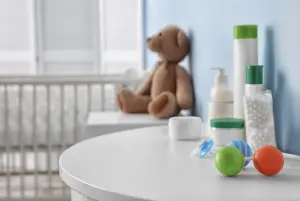 Whether you're at home on the changing table or out for a walk, you'll always need a minimum of equipment to change your little one and get them all clean. Above all, use products suited to baby's sensitive skin. You will need:
- Cotton pads, a washcloth or hypoallergenic wipes
- A little lukewarm water and mild soap
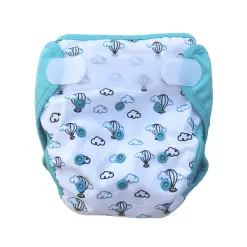
- Disposable or cloth nappies
- A nappy cream to prevent nappy rash
- Oleo-calcareous liniment
- A change of clothes for baby
- A toy or a mobile to keep baby entertained during the nappy change.
Important: never leave baby alone and unattended on the changing table, as they could fall.
Changing baby step by step
 Organise your changing table properly before you start the change. Once all the changing essentials are within reach, start by washing your hands to avoid passing on any germs. Lay baby down on a clean towel. From the very youngest age, don't hesitate to tell baby that you're about to change them (putting words to actions and emotions reassures little ones).
To avoid undressing baby completely and keep them nice and warm, choose clothes that open at the front. It will make life easier for you and save you from moving baby around in all directions during the nappy change.
Undress baby's legs to get to the nappy. Move baby's clothes as far as possible from the nappy to avoid soiling them. Then, uncover baby's lower half so you can open the dirty nappy. Fold back the tabs of the nappy so they don't stick to their skin. Start wiping their bottom with the top part of the dirty nappy. Watch out: newborns love to empty their bladder once their bottom is in the open air. To avoid nasty surprises, have a cotton pad ready to place over their genitals. That way it won't go everywhere.
 Next, fold the nappy down and use the cotton pads or the damp washcloth with a little mild soap to remove any traces of stool and urine. Always clean from the lower tummy towards the bottom, never upwards. Then gently wipe the folds of the groin and between the buttocks. To clean properly, gently lift baby's bottom upwards, or roll their hip to the side, and their body will naturally follow the movement.
 Next, fold the nappy down and use the cotton pads or the damp washcloth with a little mild soap to remove any traces of stool and urine. Always clean from the lower tummy towards the bottom, never upwards. Then gently wipe the folds of the groin and between the buttocks. To clean properly, gently lift baby's bottom upwards, or roll their hip to the side, and their body will naturally follow the movement.
After that, close the dirty nappy up on itself and throw it away. To stop smells lingering, make sure it is properly closed.
Wash baby's bottom and genitals with lukewarm water. When baby is clean, slide the new nappy under their bottom.
At every change, check baby's bottom. If you notice any redness, don't panic: redness on the bottom is common in newborns. Simply treat it with a suitable cream recommended by your doctor.
Once baby is completely dry, you can finish the change by applying a cream or some liniment to moisturise and protect their delicate skin. Finish by fastening the nappy without making it too tight, as baby's tummy swells after a feed. To make sure the nappy fits properly, you should be able to slide two fingers between baby's tummy and the nappy.
Baby is wriggly during the change: what should you do?
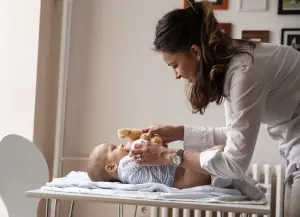 Does baby cry when you undress them? Do they wriggle non-stop as soon as they're lying on the changing table? There's no need to worry: lots of parents face exactly this situation. Baby's tears are often a sign of discomfort or of apprehension about something unfamiliar. Several things can upset baby during a nappy change. First of all, your little one may be cold. After all, being undressed in a chilly room is unpleasant. Make sure you change them in a room at 18°C-20°C. If baby still isn't reassured, they probably need something to look at so they don't feel disorientated. Reassure them and help them find their bearings. Talk to baby: the sound of your voice will comfort them. You can also use a small toy or a mobile to calm them. When baby focuses on watching something familiar, their mood settles. This is the moment to find your own ritual: tickles, strokes, kisses… See how baby reacts and adapt. And finally, take your time! Baby will feel better and the moment will be all the more enjoyable.
So, parents, ready to change 4000 nappies at last?
Dylan
Proud dad of three little ones and founder of Premiers Moments. Together with the whole team, I share our parenting tips here to support you, from pregnancy through your child's first years.