













How to prepare for giving birth
Jul
You are starting your ninth month of pregnancy and several questions, often a source of stress, keep going round in your head: How do I prepare for giving birth? What should I know before labour? Will I do the right thing for baby?
Don't panic, Premiers Moments is here to guide you and help you give birth and meet the love of your life with complete peace of mind!
How does antenatal preparation for birth work?
 This is where it all begins: your preparation for giving birth! First of all, you should know that in France this preparation takes place over 7 sessions and is fully reimbursed by the Assurance Maladie (French national health insurance), provided it is carried out by a doctor or a midwife. Guided and supported throughout your pregnancy, you will discover all the keys to giving birth. In fact, if you are around your 4th month of pregnancy, you can already book your first appointment with your midwife or doctor for what is called the early antenatal interview. Its purpose? To talk with your healthcare professionals about all your questions, your difficulties and your expectations in terms of support during your pregnancy and after the birth. Compulsory since May 2020, this appointment also lets you plan the antenatal classes that will follow. So, if you haven't started your preparation for giving birth yet, now may be the time to book your first appointment! In the meantime, here is some information about how this long-awaited moment unfolds!
What are the different stages of labour?

Your labour will take place in four distinct phases:
The first is what's known as the "labour phase". It shows itself through contractions that start to become regular, roughly every hour. Your cervix then begins to change and dilate. Stay alert, as you can sometimes have these contractions without any change to the cervix. This is known as "false labour". But if, for an hour, your contractions are 5 to 10 minutes apart, this is it! Off to the hospital! Once your contractions have become closer together and have increased in intensity and length, your waters will break. In some cases, the obstetrician may break them to prepare for the birth. Bear in mind that the length of this phase varies from woman to woman: you are unique and so is your labour! Do keep in mind, though, that it is normally shorter for a woman who has already had a baby.
The second phase of labour is known as engagement. Your baby will move down into your pelvis and press against your rectum, then against your perineum. You'll then feel the urge to push in turn. And indeed, it's the right moment! It's time for you to start pushing!
The third phase is the expulsion phase. It usually lasts around thirty minutes but, once again, its length can vary depending on you. Baby will tilt backwards and the top of their head will move up towards the pubic symphysis and can then come out through the vagina.

The fourth stage is the delivery stage. This is the long-awaited meeting! Baby's head comes out naturally and the midwife helps to bring out the rest of the body.
And even though your little one is here, it isn't over yet! Your placenta must also be delivered. This is called the delivery of the afterbirth, a real deliverance (in every sense of the word!). Usually, the placenta comes out naturally around thirty minutes after baby. However, it may not come out on its own, and the midwife or obstetrician may have to remove it manually.
You should also know that you'll lose some blood during the birth. You'll lose around 500 ml of blood, but rest assured, this is perfectly normal!
Which positions will make giving birth easier?
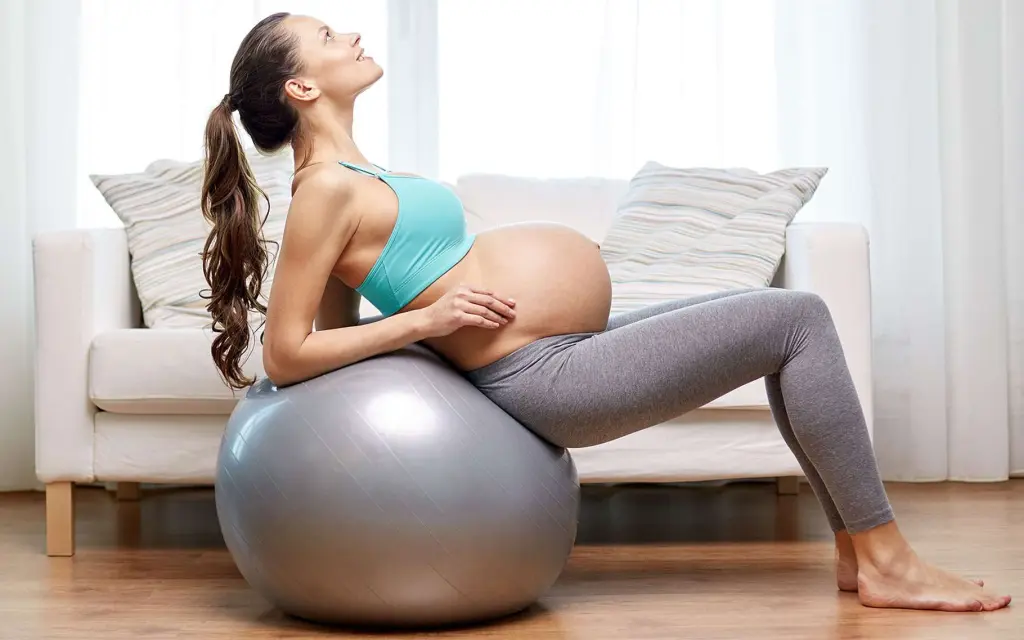
Throughout the time before giving birth, certain positions will help baby engage properly in the pelvis. Here are four of them!
Sitting on the ball (often provided by the maternity unit). The aim is to make movements (circles, figures of eight) in every direction.

The suspended position. While sitting, ask your partner to stand facing you. Then put your arms around their neck and let yourself go completely, with your bottom towards the back.
In this position, you open your pelvis as much as possible and make way for baby, so they can engage properly in the pelvis.
On all fours. Get down on all fours, with your arms resting on the ball. In this position, relax: your pelvis is open and you can gently make small circles to move your pelvis and help baby engage.
The squat position. As the name suggests, get into position as if you were about to do a squat, that is, bend your legs without straining, with something in front of you for support.
You are now ready to meet the love of your life with complete peace of mind! And above all, don't forget to involve your partner, so they can share this magical moment too!
Dylan
Proud dad of three little ones and founder of Premiers Moments. Together with the whole team, I share our parenting tips here to support you, from pregnancy through your child's first years.
Pack baby's hospital bag