












Moses basket, bedside crib or cot: how to choose your baby's bed?

Oct
When I became a dad for the first time, I quickly realised one thing: there is a real lack of information to help you choose the right products for your baby. And the bed is no exception! Moses basket, bedside crib, cot… Which one should you choose, and when? In this article, I give you the pros and cons of each, the combination I recommend, and the three mistakes I made myself.
The cot: perfect for later, too big at first
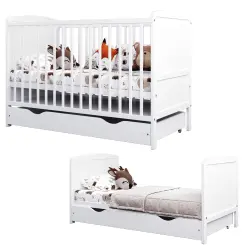
The first bed that probably springs to mind is the classic cot. It's more or less a must from around 6 months to 3 years old. Some parents even use it from birth.
When it comes to safety, it really is perfect. The narrow gaps between the bars stop baby from falling out during the night and from getting their head or arms stuck. Another advantage: on most models, the height of the mattress base is adjustable. So you can set the mattress up high for a tiny baby, then lower it as they grow. That way, in the first few months, you don’t need to lean right down into the cot to pick them up.
On the downside, a cot takes up space. It isn’t always easy to move, or to set up next to your bed. Above all, it isn’t ideal for a newborn. In the first few months, baby needs to sleep in a snug, reassuring space. The smaller the space, the more it reminds them of their mum’s tummy, and the better they sleep. But a cot is far too big for that. And no, a cot reducer isn’t the answer: it is strongly advised against (we explain why in our article Cot reducers: are they dangerous for babies?).
The Moses basket: the ideal cocoon for the first months
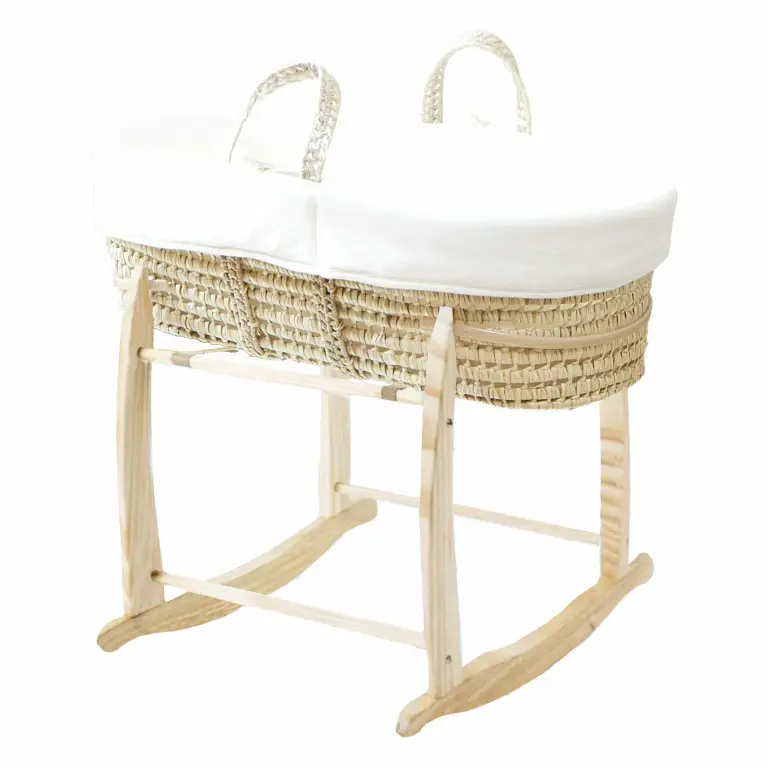
So where should baby sleep in the first months to feel good? In a Moses basket! As you've guessed, its big advantage is that it's small and narrow. Baby touches the sides with their hands, feels reassured, and feels really comfortable.
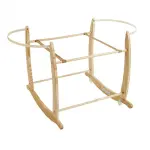
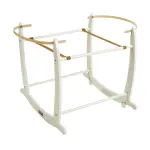
Another big plus: the Moses basket goes wherever you go. It’s light, so you can keep an eye on your baby wherever you are in the house. What’s more, it’s no wider than a bedside table, so you can set it up right next to your bed and keep baby close to you all night. With a suitable stand, it even sits level with your bed. That way, in the middle of the night, you can pick baby up effortlessly.
Its only drawback? It's only used for the first few months. After that, you'll inevitably have to move on to a cot.
👉 Our baby Moses basket with mattress is hand-woven from palm leaves: each one is unique. Its soft lining is made of GOTS-certified organic cotton fabric, and you choose its colour and its stand.
The bedside crib: the other option, if you have the space
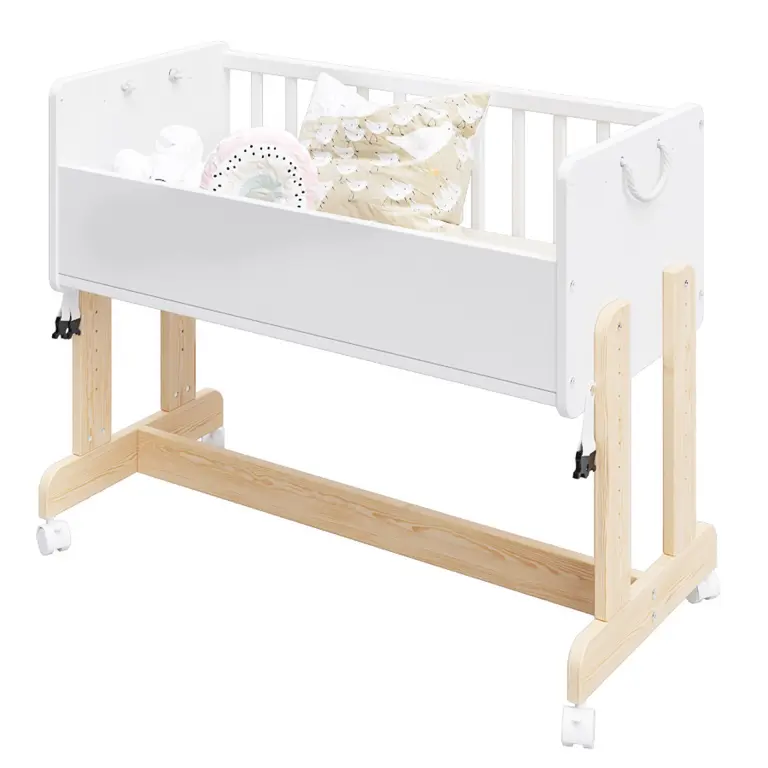
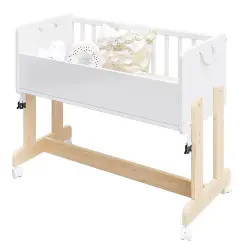
A bedside crib is another alternative to a cot for the first few months, provided you have enough space in your bedroom. It attaches to your bed and offers broadly the same advantages as a Moses basket. Above all, it really makes day-to-day life easier! Once it’s attached to your bed, there’s nothing between you and baby any more. So in the middle of the night, you can pick them up without even getting out of bed: to breastfeed, for example, or to give them a cuddle when they cry. On the other hand, it is often bigger than a Moses basket, so baby gets less of that snug, reassuring feeling.
👉 Discover our bedside cribs. Some, like our Ornella 5-in-1 bedside crib, can later be converted into a desk, a bench or a toy chest.
Our advice: a Moses basket or bedside crib, then a cot
For me, the best combination is to start with a Moses basket or a bedside crib for the first months. The Moses basket follows you all around the house; the bedside crib keeps baby right next to you at night. Then, as soon as baby is too cramped, you move on to the cot.
If you've chosen the Moses basket, here's a very simple tip for a gentle transition: put the Moses basket inside the cot and let baby sleep in it there for a while. That way, they discover their new bed without losing their cocoon. Then you can switch to the cot for good.
3 mistakes to avoid when choosing your baby's bed
When I bought my baby's first bed, I wish I'd known all these little details. The result: I had to change beds very quickly. And as it wasn't convertible, I couldn't even manage to resell it on second-hand sites. So, to make sure this doesn't happen to you, here are the three mistakes to avoid.
Mistake no. 1: not checking the European standards
These standards are extremely important. They require manufacturers to meet very precise manufacturing criteria, and that is what guarantees the bed poses no danger to your baby. If the bed meets the standards, this information always appears in its description. If you can't find it, that's not a good sign: move on!
| For a… | Check standard… |
|---|---|
| Cot | EN 716 |
| Moses Basket | EN 1466 |
| Crib or bedside crib | EN 1130 |
Mistake no. 2: choosing the wrong mattress
Contrary to what you might think, a very thick mattress is no guarantee of quality. What you really need to look at is the density:
- for a Moses basket or a small crib, the ideal density is between 18 and 25 kg/m³;
- for a cot, allow at least 23 kg/m³.
Here again, you’ll find this information in the product description. For example, our Moses basket mattress and the Ornella crib mattress are rated at 22 kg/m³, and our breathable 60×120 mattress at 25 kg/m³.
Mistake no. 3: not choosing a bed that grows with baby
A small crib or a bedside crib lasts about six months. And after the age of two, baby will want to climb out of their cot over the top. So, to avoid throwing your money away, choose furniture that grows with your child! Some bedside cribs convert into a desk, a bench or a toy chest. And some cots let you remove the bars and fit a small safety rail instead: that way, the bed lasts much longer.
In fact, it was to stop other parents getting caught out like I was that we created a whole range of bedside cribs and cot beds, made in Europe.
Your questions about baby's bed
Which bed for a newborn?
A small sleeping space, such as a Moses basket, a crib or a bedside crib. Baby feels reassured in it, and therefore sleeps better.
Until what age can you use a Moses basket?
For the first months, until baby is cramped or starts to roll over or sit up. Always follow the manufacturer's instructions.
At what age should you move to a cot?
Generally around 6 months, as soon as baby is too cramped in their Moses basket or crib. They will then use it until around 3 years old, and much longer if it is a cot bed.
Dylan
Proud dad of three little ones and founder of Premiers Moments. Together with the whole team, I share our parenting tips here to support you, from pregnancy through your child's first years.
Discover our nursery furniture