











Cloth nappies: how do they work?
Feb
Recently, the composition of disposable nappies has led many parents to question using them, and many of them are now looking for alternatives for their baby. On top of these obvious health reasons, environmental and financial reasons are also prompting some parents to switch to cloth nappies for their baby. But how many should you buy? How do you use them? And how do you wash them? Premiers Moments is here to explain it all!
What is a cloth nappy?
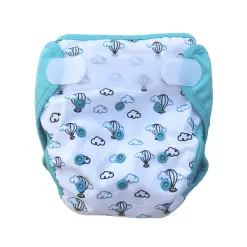
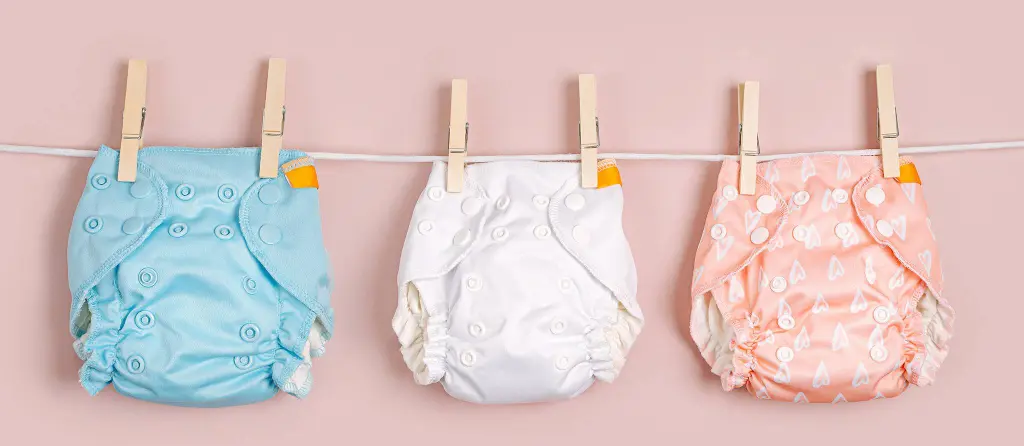
Forget any preconceived idea of a cloth nappy as a muslin square fastened around baby. Today, cloth nappies look just like disposable ones in every respect, with one key difference: they are reusable.
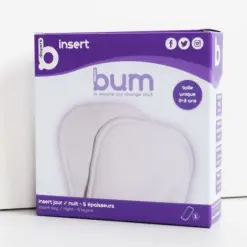
Whichever model you choose, a cloth nappy (which physically looks like a swim nappy) always has two parts: an absorbent nappy part called the “insert”, which collects urine and stools, and a waterproof outer wrap that prevents leaks.
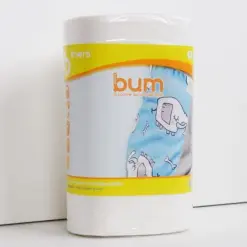
If you want to make life easier, you can add liners to the insert. The liner makes it easier to dispose of stools and keeps baby's bottom protected from moisture. Whether washable or disposable, you then simply throw it away or wash it after use. In the same way, disposable inserts are also available.
Several sizes of cloth nappy?

There are two sizing systems for cloth nappies. First, one-size nappies. Also called birth-to-potty nappies, they fit baby from birth until they are potty trained (that is, from roughly 3 to 15kg). A system of press studs lets you make the nappy bigger or smaller, so it adapts as closely as possible to baby's age and shape. This is the most economical system: you don't need to buy new nappies as your little one grows and gains weight. In reality, however, these nappies are fairly large and are therefore better suited from 2-3 months.
Other cloth nappies come in several sizes, meaning each nappy suits a particular weight range. You will therefore need to adjust the size as baby grows. The main advantage of this system is that the nappy fits baby's body perfectly.
What are the different types of cloth nappy?
Very easy to use, the All-in-One (AIO) cloth nappy consists of a wrap with the insert sewn in. With this system, the absorbent part and the waterproof part are one and the same. In use, it is just like a disposable nappy. It needs no folding and goes on and comes off in a single movement. However, it has to be washed after every use. You can also add extra absorbent layers inside if needed, especially as baby grows.

Another version of the cloth nappy is the All-in-2 (AI2). It consists of an absorbent part (the insert) that is placed inside a protective wrap. This way, only the absorbent part needs washing. The protective wrap, meanwhile, can be reused two or three times if it is still clean.
The All-in-Three (AI3) cloth nappy has its advantages too. As the name suggests, it is made up of 3 parts: an absorbent part, a pocket and a protective wrap. The pocket is the waterproof part of the nappy. In some cases it is already sewn in; in others it attaches to the protective wrap. You place the absorbent part, which must be changed after every use, inside this pocket. This system means you can wash the pocket and the protective wrap less often.
Finally, the last type of cloth nappy is the classic cloth nappy. Made entirely of fabric, it forms the absorbent part of the nappy. You therefore need to put a protective wrap over it to make it waterproof. This type of nappy is very handy for the night and for long naps. Here too, the protective wrap can be used 2 to 3 times where possible.
How many should I buy?

The number of cloth nappies to buy depends on your little one's age and how often you do the washing. Plan enough nappies for two days so you are never caught short! If you have a tumble dryer and plan on one wash a day, a dozen cloth nappies will do the job. If you don't have a tumble dryer, or your nappies can't go in one, think about buying two extra nappies.
If you'd rather space out your washes and only run one every other day, allow 16 cloth nappies (and still 2 more without a tumble dryer). And for one wash every three days, plan on 22 cloth nappies (and 24 without a tumble dryer).
You're probably thinking that all these nappies are quite an investment, but we promise you'll come out on top in the long run!
How do you use them?
First of all, just as with disposable nappies, your baby needs changing every 3/4 hours during the day. But how do you actually use cloth nappies? To begin with, soak them in cold water before using them so that the fibres of the inserts swell and become more absorbent. You can then wash them with an enzyme-free detergent and rinse them in water. Then, just as you would put on a disposable nappy, make sure it is properly fastened around baby's tummy without squeezing it. Remember to check that neither the insert nor the liner sticks out of the protective wrap once the nappy is fastened.
When it comes to changing the nappy, if it's an AIO, you simply put the whole nappy in the wash and take a fresh one. For the other models, you only wash the absorbent part each time and, depending on how clean it is, you may or may not wash the protective wrap.
And how do you wash them?

Depending on your choice, during the change you either throw away the liner and the insert or wash them. In that case, dispose of the stools and rinse off any residue straight away. Then, depending on how often you run the washing machine, transfer the used nappies to a bin bag or a closed container until wash day.
For washing, it is first recommended to fold back the Velcro tabs so they don't get damaged, and to run the machine at 40°C with an enzyme-free detergent and no fabric softener. Always check the washing instructions from your cloth nappy brand. For more stubborn stains or smells, you can opt for a 60°C programme. Never use stain remover, bleach or vinegar, which are harmful to baby's skin and could damage your nappies!
Once the nappies are nice and clean, you can let them air dry or put them in the tumble dryer if your model is suitable for it.
There you go! You now know all about cloth nappies! Even though many parents find them a hassle, they also offer plenty of long-term benefits – all you have to do is take the plunge!
Dylan
Proud dad of three little ones and founder of Premiers Moments. Together with the whole team, I share our parenting tips here to support you, from pregnancy through your child's first years.