






Disposable nappies or cloth nappies?

Feb
For a few years now, cloth nappies and disposable nappies have been locked in a friendly little battle. While cloth nappies are gradually becoming a habit for many parents, your heart is probably still torn between the two options. Luckily, Premiers Moments is here to guide you through this choice! The environmental impact, the cost and the practicality of these nappies will hold no more secrets for you!
What is the environmental impact of the nappies I put on my baby?
There is not yet any certification or label specific to nappies, and manufacturers of disposable nappies have no legal obligation to list their components in detail. This makes it hard to make sense of their composition and environmental impact.
To put it very simply, bear in mind that from birth until they are potty trained (at around 2 and a half), your little one will use approximately 1 tonne of disposable nappies. Given that they are made of plastic, cellulose and synthetic fabrics, and that they take 200 to 500 years to break down in nature, the negative environmental impact they cause is obvious.
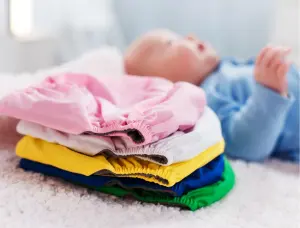
As for cloth nappies, they are very often made from organic cotton or use certified materials. As a result, they cause little pollution. What's more, unlike manufacturers of disposable nappies, cloth nappy makers are happy to be open about their manufacturing process and composition.
However, while disposable nappies have work to do at the production stage, cloth nappies call for good habits when you use them in order to optimise the product's life cycle. Their main environmental drawback lies in the very frequent use of the washing machine. Choosing cloth nappies therefore means using a lot of electricity and water.
Which nappy is best for baby's health?
Although no firm claim can be made about the harmful effects of disposable nappies on baby's skin, they do make irritation more likely. Why? Their airtight nature retains heat, and the plastic rubbing against baby's brand-new, delicate skin is to blame. The main risk in this case is nappy rash. This is an inflammation of the skin caused by prolonged contact between baby's skin and a soiled nappy – the famous red bottom. But don't worry, it's more of a nuisance for your little one than anything else; it's nothing serious!

Cloth nappies, on the other hand, are made from natural fibres and are far more breathable than disposables. This reduces the risk of redness or irritation, because baby's skin can breathe more! What's more, their flexibility means they adapt perfectly to baby's shape. Their growing hips can develop freely!
Which one is the most cost-effective?
As you know, keeping baby's bottom nice and clean comes at a cost, and not a small one! How much you invest will vary depending on the option you choose. Indeed, you should know that a nappy costs between €0.15 and €0.40. So for an average of 4500 changes, total spending can be estimated at between €675 and €1800. On top of this, you can add the cost of waste disposal paid through local taxes. The bill then comes to between €925 and €2238 for the whole period until baby is potty trained.
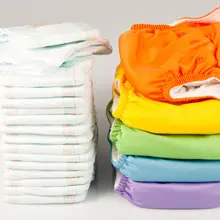
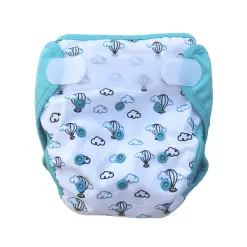
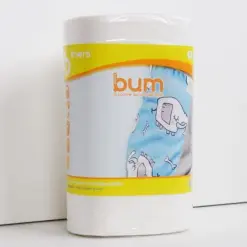
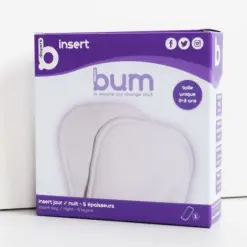
The calculation is different for cloth nappies, as they are a long-term investment. Your little one needs a good twenty or so cloth nappies, which comes to between €350 and €600. To this you can add the wipes needed to collect stools during changes, as well as washing costs (between €114 and €182). The total then comes to between €514 and €832 over the nappy-wearing period with cloth nappies.
In the end, despite the large upfront investment, cloth nappies (well looked after) cost two or even three times less than disposable nappies! Also bear in mind that they can be reused for future babies if you take good care of them.
And which is the most practical day to day?
On this point, the answer seems obvious: what could be simpler than disposable nappies? The only hassle is going to the supermarket regularly to stock up! Apart from that, their main strength is how easy they are to use. They make life easier for new parents: you buy them along with your coffee, use them and, hey presto, throw them away!
The reality is somewhat different for cloth nappies. First of all, they are bulkier and therefore take up more room in the cupboards. Then, in day-to-day practice, nappy changes take longer with cloth nappies, as many models don't go on in a single movement. You will also have to put them somewhere when they are dirty. Finally, one last constraint to bear in mind is managing the extra loads of washing. Handling cloth nappies takes quite a bit of organisation!
So there you have it, everything you need to know about this disposable vs cloth nappy “match”! While the cloth nappy seems the right choice in terms of environmental impact, health and cost, it does require a certain know-how and daily organisation, unlike the disposable nappy, which is incredibly easy to use. All that's left is for you to choose, based on your own criteria!
Dylan
Proud dad of three little ones and founder of Premiers Moments. Together with the whole team, I share our parenting tips here to support you, from pregnancy through your child's first years.