













Pregnancy check-ups: what you need to know

Aug
Medical check-ups… One of the very important formalities not to overlook when you're pregnant! But when do these appointments take place? Which blood tests need to be done?
Often a source of stress, these pregnancy check-ups will let you know whether everything is going as well as possible and whether baby is developing well.
But stay zen, Premiers Moments is here to help you not to forget them!
Where should I start?

During your 9 months of pregnancy, the medical check-ups come one after another, and you will need to attend 7 compulsory antenatal appointments.
Here is the list of pregnancy check-ups not to forget:
| Month of pregnancy | Type of check-up |
| 1st month | 1st antenatal appointment (full medical, gynaecological and obstetric examination) + blood and urine tests |
| 2nd month | Trisomy 21 (Down's syndrome) screening test |
| 3rd month | 1st ultrasound scan |
| 4th month | 2nd prenatal appointment + Dental check-up |
| 5th month | 2nd ultrasound scan + 3rd prenatal appointment |
| 6th month | 4th antenatal appointment |
| 7th month | 5th antenatal appointment |
| 8th month | 3rd ultrasound scan + 6th prenatal appointment |
| 9th month | 7th antenatal appointment + appointment with the anaesthetist + amnioscopy |
| *The mandatory prenatal examination includes a follow-up check: Weight, blood pressure, measurement of the uterus, a vaginal examination, listening to the foetal heartbeat, a urine dipstick test and blood tests. |
This monitoring can be carried out by a gynaecologist, a GP or a midwife (for a pregnancy with no particular risk). It's also good to know that in France these check-ups are fully reimbursed by the Sécurité sociale (French social security).
Blood tests
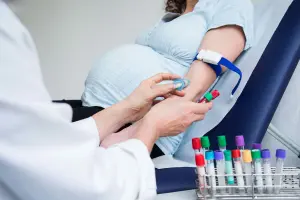
If you don't like needles, you're in for a treat!
At your gynaecological check-ups, you'll have a blood test every month. This makes it possible to determine your blood group, but also to test your antibodies against certain diseases, viruses and conditions.
Urine tests

Every month, you'll also be asked to have your urine tested to check your blood sugar and protein levels and to detect any bacteria. Note that having sugar in your urine does not necessarily mean diabetes, but it can be a sign that the baby is too big and therefore more vulnerable.
The aim of all these checks is to identify any potential problems early on, such as gestational diabetes, a risk of pre-eclampsia or any other type of infection.
You will also be screened for possible urinary tract infections. If in doubt, you will then need to have a urine test (ECBU, a urine culture) at the laboratory. This test identifies the exact germ so that you can be prescribed an antibiotic suited to the bacteria causing the infection.
What should you do next?

Once you've had your first antenatal check-up, your midwife or gynaecologist will give you a document called "Premier examen médical prénatal" (first antenatal medical examination).
To have 100% of your medical costs covered, you'll need to send the pink section to your health insurance fund (caisse d'assurance maladie) without fail before the end of the 3rd month of pregnancy.
And to receive the birth grant (prime de naissance), you need to send the blue sections to your family allowance office (caisse d'allocations familiales).
Finally, in addition to all these check-ups, you'll have ultrasound scans in the 3rd, 5th and 8th months of pregnancy. What could be better than watching your little one grow day by day…
Dylan
Proud dad of three little ones and founder of Premiers Moments. Together with the whole team, I share our parenting tips here to support you, from pregnancy through your child's first years.
Pack baby's hospital bag